How to Read a Betting Line: Understanding Odds Movement and Line Shopping
May 19, 2026
Understanding a betting line allows players to identify underdogs and favorites. It is a critical skill that all gamblers need to develop. A betting line generally includes point spreads, moneyline odds, and over/under totals. This allows bettors to assess risk, compare odds across various crypto sportsbook providers, and track trends in the market.
For example, if a team opens at -3.5 and moves to -5.5 before kickoff, this suggests strong betting activity on that side. Understanding odds movement like this can help players spot where the market is shifting and whether value still exists. Over time, consistently reading these movements correctly can improve decision-making and lead to better long-term results.
This guide will explain the key components of a betting line, how and why lines move, and how to use line shopping strategies to find the best possible odds before placing a bet.
What is a Betting Line?
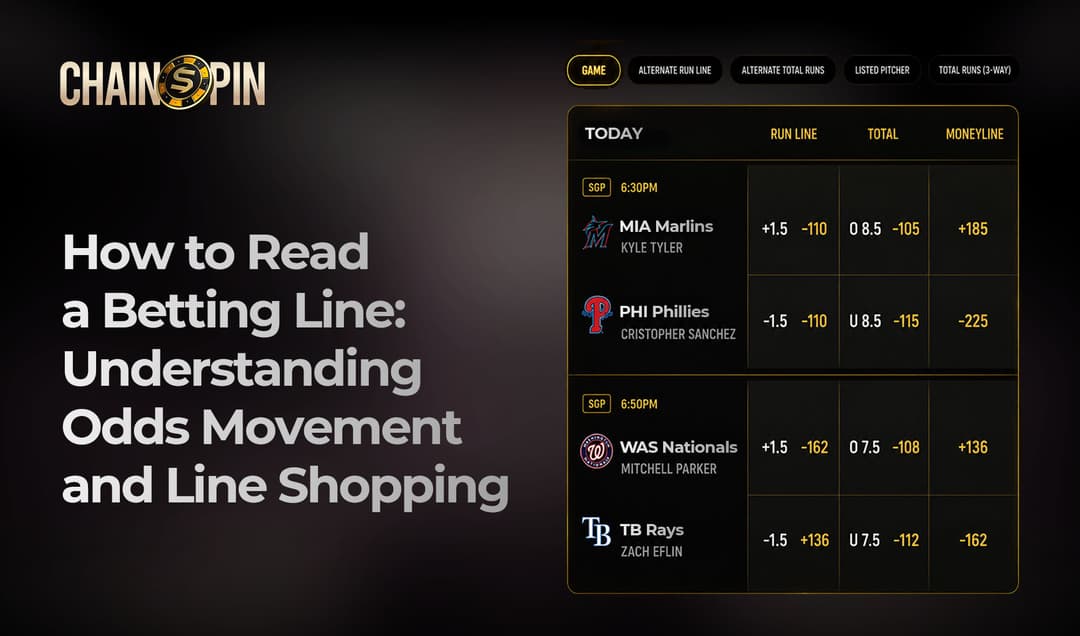
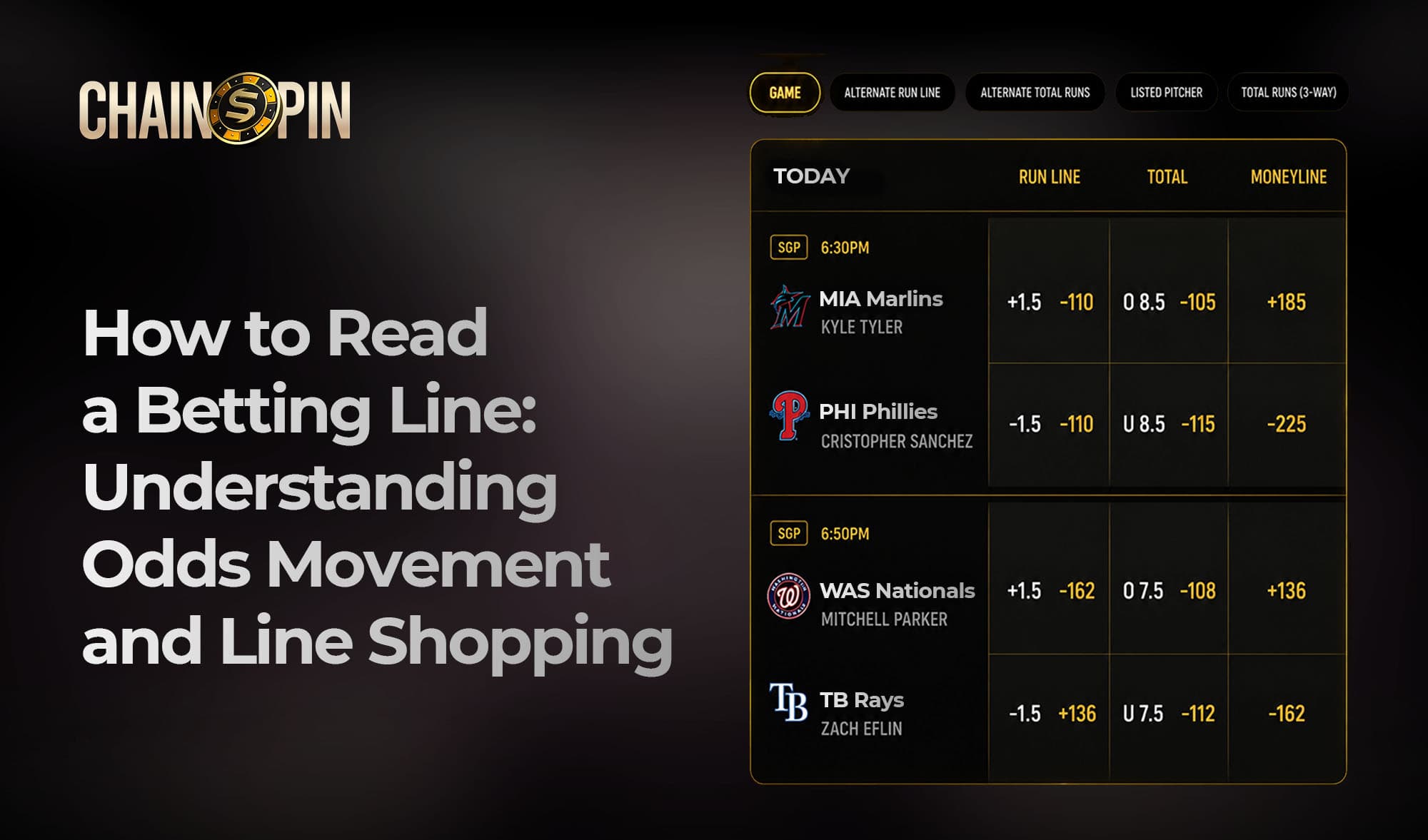
A betting line represents the odds and spread offered by a sportsbook. It has the following key components: the odds (which determine payout), the point spread (which reflects the expected margin of victory), the moneyline (the straight-up winner), and the juice or vig (the sportsbook’s margin). Together, these elements form the full “line” that bettors use to assess risk and potential return.
For example, in a football match between Manchester City and Real Madrid, the line might show Manchester City at 1.80 odds and Real Madrid at 2.20. A $100 bet on Manchester City would return $180 if they win, while the same bet on Real Madrid would return $220. This demonstrates how favorites offer lower returns and underdogs offer higher potential payouts.
The key difference between a “line” and “odds” is that the line refers to the complete betting offering, while odds are just one part of it. For instance, a line could include Manchester City -1.5 with 1.90 odds, combining both the spread and the price, whereas the odds alone (1.90) only show the potential return without the full context of the bet.
Understanding How To Read a Betting Line
It’s worth understanding how to read a betting line by looking at the individual components in more detail:
-
- Point spread: This represents the margin a player or team must win by. For example, -3.5 means the favorite must win by 4 or more, while +3.5 allows the underdog to lose by up to 3.
-
- Moneyline: A straight bet on who will win with no spread involved. Favorites have lower returns (e.g., -150), while underdogs offer higher payouts (e.g., +130).
-
- Over/Under (totals): A bet on the combined number of games, points, or goals in a match. For example, over 22.5 games in tennis.
-
- Juice/Vig: The sportsbook’s commission, typically shown as -110 odds, which impacts the potential profit on a bet.
For example, in a tennis match between Sinner and Alcaraz, the moneyline might have Sinner at 1.80 and Alcaraz at 2.00, indicating Sinner is the slight favorite. The total could be set at over/under 22.5 games, meaning bettors predict whether the match will be long or short.
Understanding how each of these components works together allows players to choose the most suitable market rather than relying on a single outcome.
Understanding Implied Probability
Implied probability is the likelihood of an outcome occurring as suggested by the betting odds. It converts odds into a percentage that represents how often that outcome would need to happen for the bet to break even. It is crucial to fully grasp this concept, as it is where traders are able to improve their edge and limit risk when reading a betting line.
For example, decimal odds of 2.00 represent a 50% implied probability (1 ÷ 2.00 = 0.50). If odds are 1.50, the implied probability is around 66.7%, while odds of 3.00 imply a 33.3% chance. By converting odds into probability, bettors can compare the sportsbook’s estimate with their own analysis and identify potential value opportunities.
It is also important to understand how sportsbook margin affects total probability. In most cases, the implied probabilities for all outcomes will add up to more than 100%, with the extra percentage representing the sportsbook’s built-in edge. Recognizing this helps players avoid overestimating value and make more informed betting decisions.
Line Shopping Strategy
A solid line shopping strategy unlocks a huge number of opportunities, especially for active traders and professionals. Line shopping simply means comparing odds across multiple sportsbooks to find the best possible price for the same bet. Even small differences in odds can have a major impact over time. For example, betting at 2.00 instead of 1.90 may not seem like much, but across 100 bets, that difference can significantly increase total returns.
Half-point and juice shopping are two key parts of this strategy. Half-point shopping involves finding a better spread, such as -2.5 instead of -3.0, which can be the difference between winning and losing a bet. Juice shopping focuses on getting better odds, such as -105 instead of -110, meaning you risk less for the same potential return. Both approaches help reduce risk and improve long-term profitability.
For example, in a World Cup match between Portugal and Japan, one sportsbook might offer Portugal at -150, while another offers -140. A bettor placing a $100 equivalent stake would earn more profit at -140. Over time, consistently choosing the better line like this can make a significant difference and is one of the key habits of profitable bettors.
Advanced Line Reading Techniques
There are some advanced tricks when it comes to how to read a betting line. These tools are less useful for beginners, but once someone has mastered the basics, they can add a lot of value even though they are generally considered more risky.
Closing line value (CLV) is one of the most important concepts. It measures whether the odds you took are better than the final odds before the event starts. If you consistently beat the closing line, it is a strong indicator that your bets have value, even if short-term results vary.
Reverse line movement and steam moves are also key indicators. Reverse line movement occurs when the line shifts against the majority of public bets, suggesting sharp money is influencing the market. Steam moves refer to rapid shifts in odds across multiple sportsbooks at the same time, often signaling professional betting activity.
Consensus picks can also be used to identify value. By comparing public opinion with line movement, bettors can spot when the market disagrees with the majority. For example, if most bettors are backing one outcome but the line moves the other way, this may highlight a potential opportunity.
For instance, in a snooker match between Ronnie O’Sullivan and Judd Trump, if most public bets are on O’Sullivan but the odds shift slightly toward Trump, this could indicate sharp money backing Trump. A bettor combining CLV, reverse line movement, and consensus analysis may decide that Trump offers better value, even if he is not the popular pick.
Common Line Reading Mistakes To Avoid
There are a few mistakes that everyone should try to avoid when line reading on any betting platform. They include the following:
-
- Ignoring line movement: Not tracking how odds shift over time can mean missing key signals. For example, betting on a team after the line has already moved significantly may mean the value is gone.
-
- Not line shopping: Placing bets at the first odds you see instead of comparing sportsbooks leads to lower returns over time.
-
- Chasing line movement: Jumping on a bet after a big shift often means following the market too late, when sharp bettors have already acted.
-
- Misinterpreting juice: Not accounting for the sportsbook margin can lead to overestimating value and placing poor bets.
-
- Ignoring news and updates: Failing to consider injuries, team news, or weather can result in betting on outdated information.
Tools and Resources for Line Reading

These are some of the most useful tools for line reading.
Final Thoughts on How to Read a Betting Line
Learning how to read a betting line is critical to becoming a successful crypto casino sportsbook player. It is essential to fully understand point spreads, moneyline odds, and over/under totals and how they apply to various sports such as tennis and football. In addition to this, players should avoid the common mistakes listed in this article and leverage third-party resources to improve accuracy.
FAQs
What does -110 mean on a betting line?
It means you need to bet $110 to win $100 in profit. This reflects the sportsbook’s built-in commission on the bet.
How do I know if a betting line has value?
A betting line has value when your estimated probability of an outcome is higher than the implied probability suggested by the odds.
Why do betting lines move?
Lines move due to several factors:
-
- Large bets from professional bettors
-
- Public betting trends on popular teams
-
- Injuries, news, or weather updates
What is the difference between opening and closing lines?
The opening line is the initial odds set by the sportsbook, while the closing line is the final odds before the event starts.
How do I find the best betting lines?
Compare odds across multiple sportsbooks, check regularly for updates, and always place bets where the return is highest for the same outcome.
What is line shopping?
Line shopping is the process of comparing odds across different sportsbooks to find the best possible price before placing a bet.
Should I bet early or wait for line movement?
It depends on the situation. Early bets can secure better odds, while waiting may reveal market trends and sharper line movements.
What is closing line value?
Closing line value (CLV) measures whether your odds are better than the final market odds. Consistently beating the closing line indicates strong betting decisions over time.
How do I track line movement?
Use odds comparison websites, track multiple sportsbooks, and monitor how lines change from opening to closing to identify patterns and sharp activity.
Can I profit from line shopping alone?
Line shopping improves profitability, but it is not enough on its own. Long-term success still requires strong analysis, discipline, and consistent value betting.